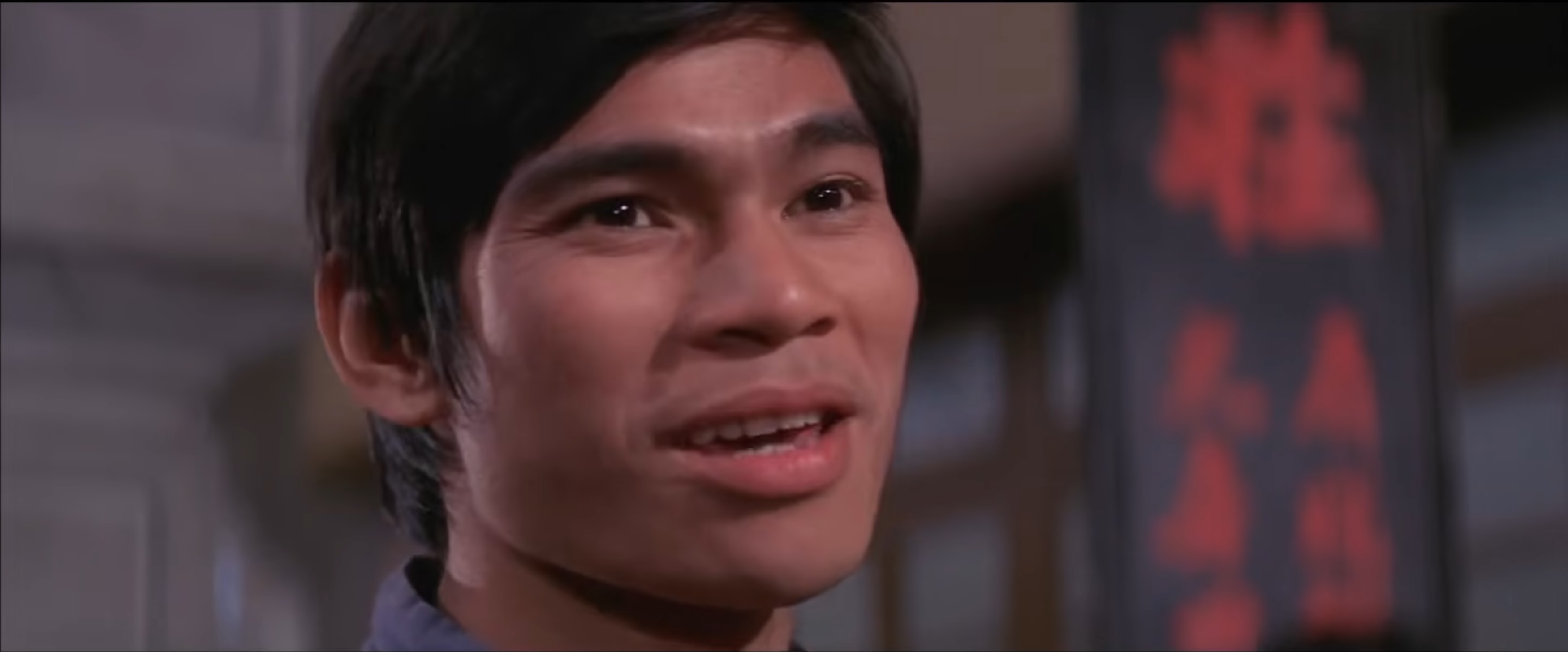
The Boxer From Shantung
The first co-direction collaboration between Chang Cheh and Pao Hsueh-Li. They would end up doing five more after this. And the first of Chang Cheh’s eight films to be released in 1972.
These two things are likely related. With the director shortage Shaw brothers needed Chang Cheh to up his already prodigious output as his name was a reliable seller at the box office. But he’s only one man, and releasing five movies a year (as he did in 1971) was already stretching his capacity.
Thus four of his 1972 releases have co-directors (or are anthology films where Chang only contributed one section).
In his memoir Chang Cheh is vague on how this collaboration worked. At one point he says that he would usually direct the first movie in a series while Wu Ma or Pao Hsueh-Li would be the lead director on the sequels. Which doesn’t explain why Pau Hsueh-Li is credited as co-director of Boxer.
I suspect Chang is eliding some details here. It’s more likely that Chang Cheh directed most of this movie, and then served a more consultative role on any sequels (with his name appearing in the credits to help juice box office).
Supporting that supposition is the very odd split nature of Boxer from Shantung, most evident in the fight scenes. Early on in the film the fights frequently cut away from the action to focus on the people observing the fight. We end up seeing the reaction more than the action.
This is very unlike Chang Cheh’s usual approach. And, indeed, the later fights drop these cuts in order to focus on the extensive disembowling and stylish bloodflow that were Chang’s trademarks. There’s no real thematic reason for the shift in editing style, which makes me think its the result of having two people work on this movie for the sake of efficiency.
Chang is also vague about if this movie was inspired by Fist of Fury or not. Which, c’mon man. Released a month before Fist of Fury, Boxer seems obviously created in response to that impending box office champion.
Unlike Duel of Fists Shaw Brothers doesn’t try to copy the story of Lee’s upcoming film, but rather targets his style. The studio promoted background/stunt actor Chen Kuan-Tai to the lead thanks to his roguish charm and, most importantly, extensive martial arts training. Bruce Lee’s “authenticity” was one of his selling points, and Shaw Brothers was chasing that same market.
Thankfully Chen Kuan-Tai wasn’t just a martial artist, he was also hugely charming. And though much of his acting here involves sternly chewing on a cigarette holder, the moments where he relaxes and smiles show the abilities he’ll bring to later roles.
Chen Kuan-Tai holds the center of the film admirably, but everything around him is pretty erratic. From the constantly-referenced “Four Champions” that only have three members (until the film’s conclusion almost magically produces a fourth one), to the unnecessary opium and gun running plots that never really amount to much of anything.
David Chiang shows up for like two scenes that don’t amount to a whole lot. He’s there to ‘inspire’ our lead, but is barely in the film. So the whole ‘brotherly love and revenge’ angle that usually drives Chang’s plots is missing.
But most mistreated would be Ching Li, the film’s sole female character. She could have been a great foil to Chen Kuan-Tai’s descent into criminality but instead the film just drops her completely. I shouldn’t be surprised when Chang Cheh treats a female character badly.
Chang is even more dismissive in his memoir, telling a story of Griffen Yueh Feng working on a movie about the younger sister of this film’s hero. “It’s the age old problem of Chinese films – making up a female title character for a male centered film!” Despite the fact that, other than the lead character’s name, 100% of Boxer is fabricated from a vaguely documented historical legend. And that same legend mentions his sister.
I do try to like these Chang Cheh movies. I really do. But he makes it hard sometimes.
Ian Whitney
Published: 2026-10-29