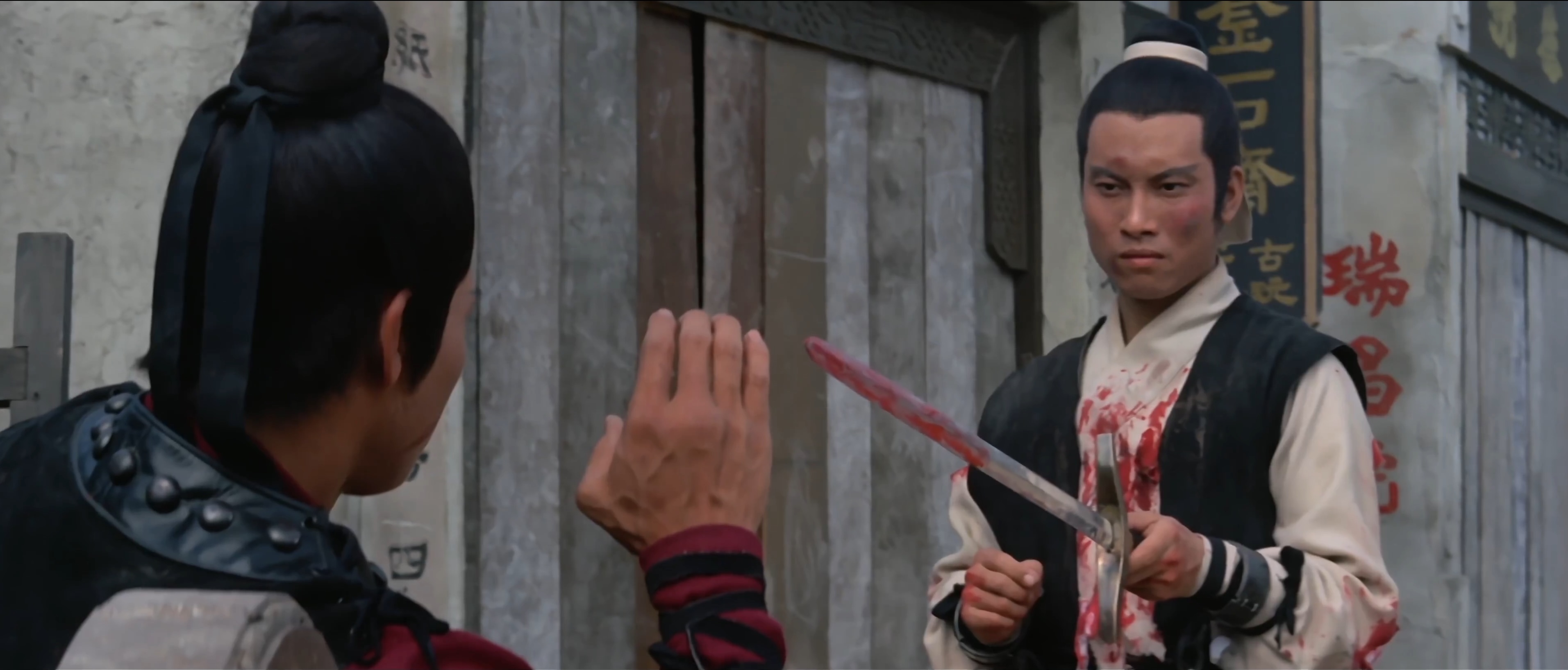
The Long Chase
Veteran director Ho Meng-Hua makes another breezy, fun wuxia – a genre that he took to like a duck to water after wrapping up the Journey To The West films in 1968. His skills in special effects combined with over a decade of directorial experience made him the natural pick for movies like these.
By now Ho was the old man of the Shaw Brothers lot. No remaining director had been there longer than his 13 years. And he would stay for another 9, making him the longest serving director in Shaw Brothers history.
So audiences can lean back and relax, knowing they are the hands of a true master. The run time may be short, but the story is never rushed or threadbare. Ho balances things well, letting Lo Lieh and Elliot Ngok Wah play a nice long game of cat and mouse full of fun effects, simple but strong characterization and a lot of people being confused about beards or the lack thereof.
Action choreography is handled by Leung Siu-Chung, a Cantonese veteran who had joined Shaw in 1970 and quickly paired up with Ho. The fights feature several long sequences of unarmed combat. Though it’s a wuxia swordplay movie, the success of 1970’s The Chinese Boxer meant a lot of movies in 1971 started experimenting with hand-to-hand fighting.
Helping Ho with the script is Chiu Kang-Chien. Still a very young screenwriter at 31 he’d written a few Shaw Brothers wuxia by this point. His career continues in that vein until the late 70s when he somehow connects with the Hong Kong New Wave (possibly due to some work he did on a few smaller Taiwanese movies) and wins a string of awards for writing movies like Ann Hui’s Boat People, Stanley Kwan’s Rouge and more, eventually winning four different Best Screenplay awards.
Ian Whitney
Published: 2026-09-19